Forward Inventory Placement vs. Backward Inventory Placement: A Strategic Guide
In the world of supply chain management, where customers expect same-day shipping and stockouts can cost a brand its reputation, inventory placement has become one of the most consequential decisions a business can make. Two dominant philosophies govern where and how companies position their stock: forward inventory placement and backward inventory placement. Understanding the differences, benefits, and ideal applications of each can mean the difference between a lean, responsive operation and one that constantly plays catch-up.
What Is Forward Inventory Placement?
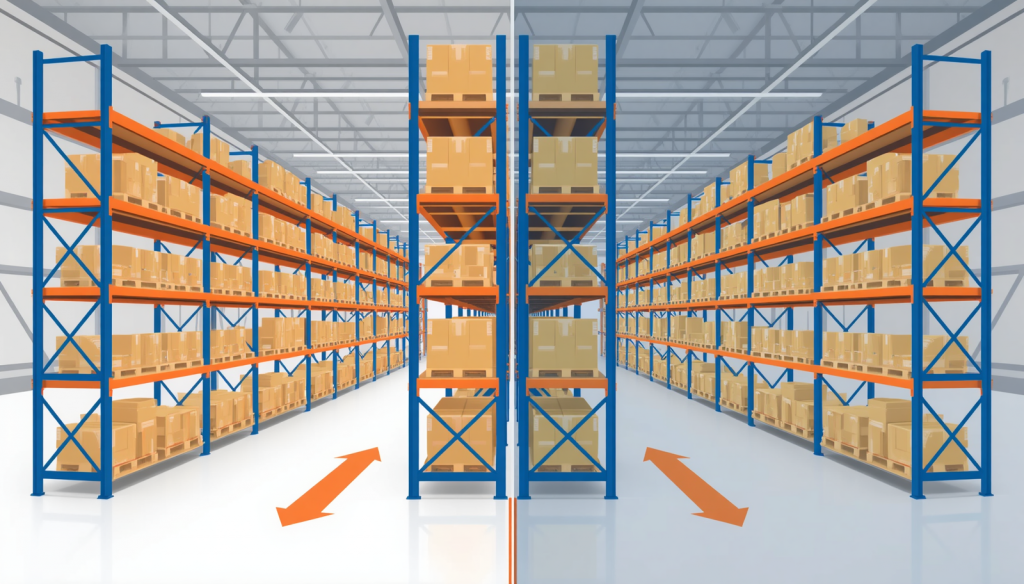
Forward inventory placement (also called forward deployment or distributed fulfillment) is the strategy of positioning stock as close to the end customer as possible — before demand actually occurs. Rather than holding all inventory in a central warehouse, businesses pre-distribute products to multiple regional fulfillment centers, retail locations, or micro-warehouses based on predicted demand.
Think of it as placing your chess pieces in aggressive, offensive positions. You’re betting on where demand will emerge and staging inventory there in advance.
Benefits of Forward Inventory Placement
- Speed of Fulfillment The most immediate advantage is delivery speed. When inventory already sits in a warehouse 30 miles from the customer rather than 1,000 miles away, last-mile delivery becomes dramatically faster. This is how Amazon offers same-day or next-day delivery in densely populated markets — not through logistics magic, but through aggressive geographic inventory staging.
- Lower Shipping Costs Shorter delivery zones mean less expensive carrier rates. By reducing the distance each package travels, businesses cut per-shipment costs significantly, especially at scale. Forward-deployed stock often bypasses expensive long-haul freight entirely.
- Competitive Differentiation In e-commerce, delivery time is a competitive weapon. Businesses that can promise and deliver within 24 hours stand out from those offering 5–7 business day windows. Forward placement enables promises that convert browsers into buyers.
- Reduced Carrier Dependency With inventory staged regionally, businesses are less reliant on long-haul carriers and more capable of using regional carriers or even gig-economy last-mile providers, which are often cheaper and more flexible.
Methods of Forward Inventory Placement
- Regional Fulfillment Centers: Building or leasing warehouse space in multiple metropolitan areas to serve surrounding zip codes.
- 3PL Partnerships: Using third-party logistics providers with distributed networks to place inventory across nodes without owning infrastructure.
- Retail Store Fulfillment: Leveraging existing retail locations as mini-fulfillment hubs, enabling ship-from-store models.
- Dark Stores: Dedicated urban micro-warehouses optimized purely for rapid fulfillment, not customer foot traffic.
Business Use Cases
Forward placement works best for businesses with predictable, high-velocity SKUs and geographically concentrated demand. It is the backbone of:
- D2C e-commerce brands with national customer bases
- Grocery and perishables delivery where speed is non-negotiable
- Subscription box companies that ship on fixed schedules and can pre-stage inventory well in advance
- Consumer electronics retailers managing predictable product launches
- Healthcare and medical supply distributors where delivery urgency is critical
What Is Backward Inventory Placement?
Backward inventory placement (also called centralized inventory or pull-based placement) is the opposite philosophy: stock is held in a small number of central locations — typically one or two large distribution centers — and only moves toward the customer once an order is placed. Inventory flows backward from a central node outward to customers on demand.
This approach prioritizes control, efficiency, and capital preservation over speed.
Benefits of Backward Inventory Placement
- Lower Inventory Carrying Costs Centralizing stock in one location dramatically reduces the total inventory a business needs to hold. In a distributed model, you must maintain safety stock at every node. With centralized stock, a single pool of inventory serves all demand, reducing both overstock and the working capital tied up in it.
- Simplified Inventory Management Managing one or two warehouses is operationally simpler than managing ten or twenty. Visibility is clearer, replenishment is more predictable, and the risk of stock imbalances — too much product in one region, a stockout in another — is minimized.
- Greater Flexibility for Slow-Moving or Unpredictable SKUs For products with uncertain, lumpy, or irregular demand, centralizing stock is safer. It allows businesses to serve any customer from a single pool rather than risking misallocation across multiple forward nodes.
- Easier Returns Processing When products flow back from customers (reverse logistics), centralized operations make returns processing and restocking far more manageable.
Methods of Backward Inventory Placement
- Single National Distribution Center (DC): One large, highly automated warehouse serving the entire customer base.
- Hub-and-Spoke Models: A central hub holds the majority of stock, with satellite locations handling only the final delivery leg.
- Make-to-Order Manufacturing: In some industries, the “warehouse” is replaced by a production facility — inventory doesn’t exist until an order triggers production.
- Cross-Docking: Goods arrive at a central terminal and are immediately sorted and shipped outbound with minimal storage time.
Business Use Cases
Backward placement is ideal for businesses with high SKU complexity, unpredictable demand, high-value or fragile products, or low order frequency. It serves:
- B2B manufacturers and industrial suppliers shipping infrequently but in large volumes
- Luxury goods brands where speed is secondary to product integrity and experience
- Furniture and large appliance retailers where freight complexity makes distributed placement impractical
- Specialty or custom-order businesses that cannot pre-stage unique products
- Startups and SMBs that lack the volume or capital to justify a distributed network
Choosing the Right Strategy: Key Considerations
The decision between forward and backward placement is not binary — most mature supply chains use a hybrid model, applying each strategy to different product categories based on data.
| Factor | Forward Placement | Backward Placement |
| Delivery Speed Priority | High | Low to Medium |
| Demand Predictability | High | Low or Variable |
| SKU Count | Low (fast movers) | High (full catalog) |
| Capital Availability | Higher | Lower |
| Operational Complexity | Higher | Lower |
| Ideal for | DTC, grocery, subscriptions | B2B, luxury, custom orders |
A practical framework: apply forward placement to the top 20% of SKUs that represent 80% of your order volume, and hold the remaining long-tail inventory centrally. This approach captures the speed benefits where they matter most while avoiding the capital and complexity cost of distributing slow-moving products everywhere.
Conclusion
Forward and backward inventory placement are two sides of the same strategic coin. Forward placement is a bet on speed and proximity — it wins customers through rapid delivery but demands greater investment and forecasting precision. Backward placement is a bet on control and efficiency — it preserves capital and simplifies operations but sacrifices competitive delivery windows.
As consumer expectations continue to rise and supply chain technology improves demand forecasting, businesses that master the art of placing the right inventory in the right location at the right time will build durable, defensible operational advantages. The question isn’t which strategy is better — it’s knowing exactly when and where to deploy each one.