
FBA vs. 3PL: Which Fulfillment Model Is Right for Your Business?
Choosing the right fulfillment model is one of the most consequential decisions an e-commerce operator will make. Get it right, and you unlock speed, margins, and scalability. Get it wrong, and you’re trapped by fees you didn’t budget for, inventory you can’t control, or a single point of failure that threatens your entire business.
Two fulfillment models dominate the conversation: Amazon’s own Fulfillment by Amazon (FBA) and independent Third-Party Logistics (3PL) providers. Both can power a thriving e-commerce operation — but they serve fundamentally different business profiles, risk tolerances, and growth strategies.
This article breaks down how each model works, where each excels, and how to decide which path — or combination — makes the most sense for your operation.
What Is Amazon FBA?
Fulfillment by Amazon (FBA) is Amazon’s in-house logistics program. Sellers ship their inventory to Amazon’s fulfillment centers, and Amazon takes over from there — storing the goods, picking and packing orders, shipping to customers, and handling returns and customer service.
From a seller’s perspective, FBA is plug-and-play. Products enrolled in FBA automatically become eligible for Amazon Prime, including 1–2 day delivery, which dramatically improves conversion rates. Amazon’s fulfillment network spans hundreds of warehouses across North America, Europe, and beyond.
How FBA Fees Work
FBA costs are made up of several components:
- Fulfillment fees — charged per unit shipped, based on size and weight
- Monthly storage fees — charged per cubic foot of space used
- Long-term storage fees — applied to inventory held for 365+ days
- Removal and disposal fees — if you need to pull inventory back
- Inbound placement fees — for directing inventory to specific fulfillment centers
Fee structures change regularly, and Amazon has trended toward increasing fees over time. Sellers must monitor these closely to protect margins.
What Is a Third-Party Logistics (3PL) Provider?
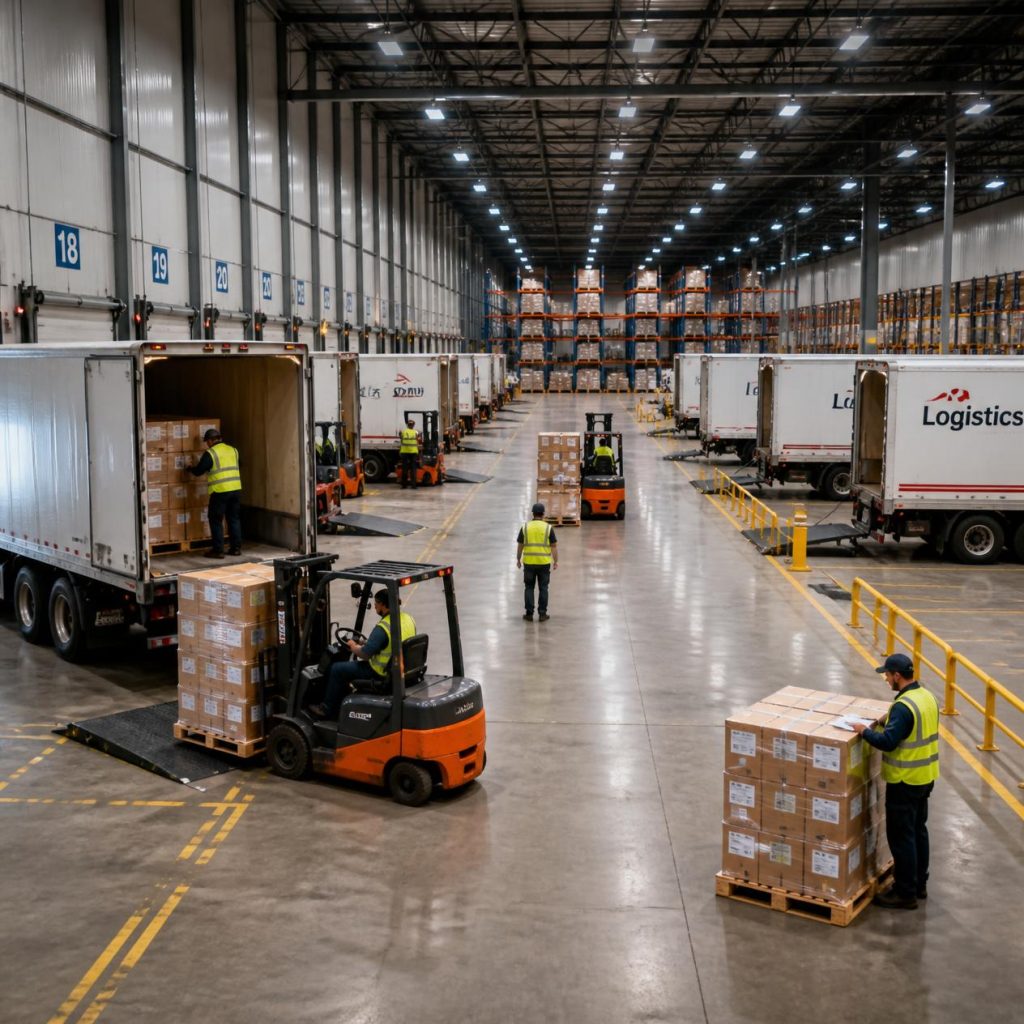
A Third-Party Logistics provider is an independent warehousing and fulfillment company that stores your inventory and ships orders on your behalf — across any sales channel. Unlike FBA, a 3PL is not tied to Amazon. It can fulfill orders from your Shopify store, your Amazon listings, wholesale accounts, B2B clients, retail distributors, and more.
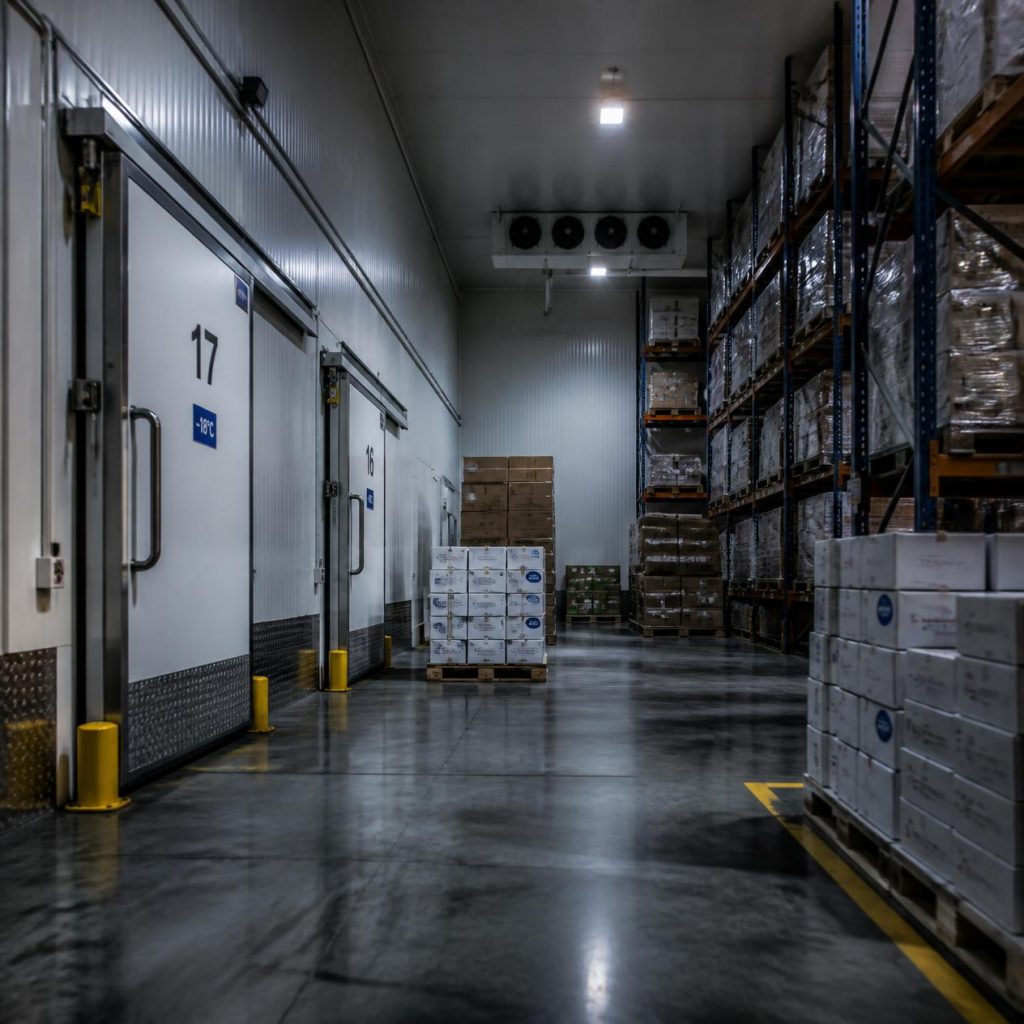
3PLs vary enormously in size, specialization, and capability. Some focus on e-commerce parcel shipping; others specialize in cold chain logistics, hazmat, oversized freight, or white-glove delivery. The relationship is contractual — you negotiate rates, service levels, and terms directly.
What a 3PL Typically Handles
- Receiving inbound shipments from your suppliers
- Warehousing and inventory management
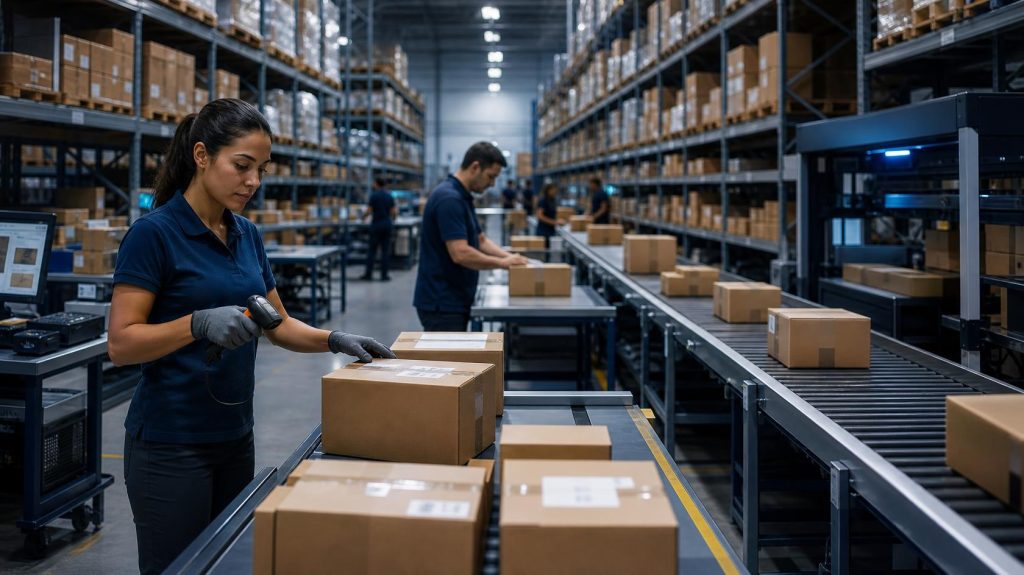
- Pick, pack, and ship for outbound orders
- Returns processing and restocking
- Kitting, bundling, and light assembly
- Custom packaging, inserts, and branded unboxing
- Multi-carrier rate shopping (UPS, FedEx, USPS, DHL, etc.)
Head-to-Head Comparison
The table below summarizes the key differences across the most important decision factors.
Factor | Amazon FBA | Third-Party Logistics (3PL) |
Setup Complexity | Low — plug into Seller Central | Medium-High — requires vetting, contracts, integration |
Upfront Cost | Low to moderate | Low to Moderate (minimums, setup fees) |
Fulfillment Speed | Prime-eligible, 1–2 day delivery | Varies by carrier & geography |
Amazon Buy Box | Strong advantage | Eligible via Seller Fulfilled Prime (SFP) |
Inventory Control | Limited — Amazon manages warehouse | Full control over stock, location, handling |
Multi-Channel Sales | Restricted / costly via MCF | Native — fulfills Shopify, eBay, B2B, wholesale |
Storage Fees | Long-term fees for slow movers | Custom rates, no arbitrary surcharges |
Scalability | Amazon’s network — instant scale | Depends on 3PL capacity & contracts |
Brand Experience | Amazon-branded packaging | Fully custom packaging & inserts |
Returns Management | Handled by Amazon (limited control) | Configurable, seller-defined policy |
Fee Transparency | Complex, variable (FBA + referral + storage) | Itemized, negotiable |
Account Risk | Suspended account = frozen inventory | Independent of Amazon account status |
Amazon FBA: Pros and Cons
Advantages of FBA
- Prime eligibility and Buy Box advantage — FBA listings are strongly favored in Amazon’s algorithm, and Prime badging significantly boosts conversion rates.
- Hands-off operations — Amazon manages the entire post-purchase experience: packing, shipping, tracking, customer service, and returns.
- Instant scale — Amazon’s network allows sellers to handle demand spikes without warehouse capacity planning.
- Credibility and trust — customers inherently trust Amazon’s fulfillment reliability, which reduces friction at checkout.
- Simple onboarding — any seller can begin shipping to FBA within days through Seller Central, with no contracts or negotiations.
Disadvantages of FBA
- Fee complexity and margin erosion — FBA fees have grown steadily, particularly for large, heavy, or slow-moving products. Sellers in low-margin categories often find FBA unsustainable.
- Limited inventory control — you ship to Amazon’s distribution algorithm. Amazon may split your inventory across multiple fulfillment centers, complicating restock planning.
- Long-term storage penalties — Amazon charges aggressive fees for inventory sitting in their warehouses beyond 6–12 months. Seasonal or slow-moving SKUs can become costly.
- Account dependency — an account suspension, ASIN restriction, or disbursement hold leaves you unable to access your own inventory or revenue. This is a significant concentration risk.
- No brand experience — every order ships in Amazon’s packaging. There are no custom inserts, unboxing experiences, or brand-building touchpoints.
- Limited multi-channel flexibility — Amazon’s Multi-Channel Fulfillment (MCF) service is available but expensive and often slower, making it impractical for high-volume off-Amazon orders.
Third-Party Logistics: Pros and Cons
Advantages of a 3PL
- Full inventory visibility and control — you decide where stock lives, how it’s stored, and how orders are routed. Real-time dashboards and direct communication give you operational command.
- Multi-channel fulfillment native — a good 3PL integrates with Amazon, Shopify, WooCommerce, eBay, Walmart, and wholesale EDI systems simultaneously, enabling true omni-channel operations.
- Custom packaging and brand experience — you can specify custom boxes, inserts, branded tape, and gift wrapping, creating a differentiated unboxing moment.
- Cost predictability — 3PL fees are negotiated upfront. You know your per-unit costs for storage, pick-and-pack, and shipping, making margin modeling reliable.
- Platform independence — your logistics operation is not dependent on Amazon’s policies, algorithms, or account status. A suspension on Seller Central doesn’t freeze your inventory.
- Flexibility for complex products — 3PLs can accommodate hazmat, temperature-sensitive goods, oversized items, kitting, and B2B pallet shipments that FBA handles poorly or not at all.
Disadvantages of a 3PL
- No automatic Prime eligibility — to achieve Prime status with a 3PL, sellers must qualify for Seller Fulfilled Prime (SFP), which requires meeting demanding performance benchmarks.
- Higher operational involvement — you manage the relationship, monitor performance, troubleshoot exceptions, and negotiate contracts. It requires more active oversight than FBA.
- Upfront minimums and setup costs — most quality 3PLs require volume minimums and may charge onboarding or integration fees.
- Variable quality — unlike Amazon’s standardized network, 3PL quality varies widely. A poor 3PL partner can generate shipping errors, lost inventory, and customer complaints.
- Integration complexity — connecting your storefronts and order management system to a 3PL’s WMS requires technical setup and ongoing maintenance.
Business Use Cases: Which Model Fits Best?
FBA Is the Right Choice When…
- You sell exclusively or primarily on Amazon and want maximum Prime visibility
- Your products are small, lightweight, and fast-moving — where FBA fees don’t erode margins
- You’re an early-stage seller who wants to scale quickly without building logistics infrastructure
- You’re launching a new product and want the fastest path to Buy Box competitiveness
- You don’t have the volume to negotiate favorable rates with a 3PL
A 3PL Is the Right Choice When…
- You sell across multiple channels (Amazon + Shopify + wholesale) and need unified fulfillment
- Your products are large, heavy, or have characteristics FBA handles poorly or charges premium rates for
- You have slow-moving inventory that would incur significant FBA long-term storage fees
- You’ve experienced — or are concerned about — Amazon account suspension or disbursement holds
- Your brand identity depends on a differentiated unboxing experience
- You’re scaling into B2B, retail, or international markets where FBA doesn’t reach
- You need complete control over your supply chain for compliance or quality assurance reasons
A Hybrid Strategy (FBA + 3PL) Makes Sense When…
Many sophisticated sellers use both models simultaneously — routing fast-moving, Prime-eligible SKUs through FBA for the conversion boost, while routing large, slow-moving, or off-Amazon inventory through a 3PL. This hybrid approach captures the benefits of both while mitigating the downsides of each.
- Use FBA for your top-selling ASINs where Prime badge drives significant conversion
- Use your 3PL as a backup fulfillment layer during FBA stockouts or account issues
- Use your 3PL for wholesale, B2B, and non-Amazon channels
- Use your 3PL for inbound prep and bundling before sending optimized units to FBA
Risk Management Considerations
One of the most underappreciated advantages of a 3PL is risk diversification. Sellers who rely entirely on FBA are exposed to Amazon’s platform risk: account suspensions, ASIN deactivations, disbursement holds, and policy changes can all bring an FBA-only operation to a halt.
|
A 3PL also provides resilience against Amazon fee increases, policy changes, and algorithm shifts that can suddenly make FBA unprofitable for certain product categories. Diversifying your logistics infrastructure is, in effect, diversifying your business risk.
Cost Analysis: What to Model
Neither model is inherently cheaper. The cost comparison depends on your product dimensions, velocity, return rate, and channel mix. Before making a decision, model the following:
- Landed cost per unit (product + inbound shipping to FBA or 3PL)
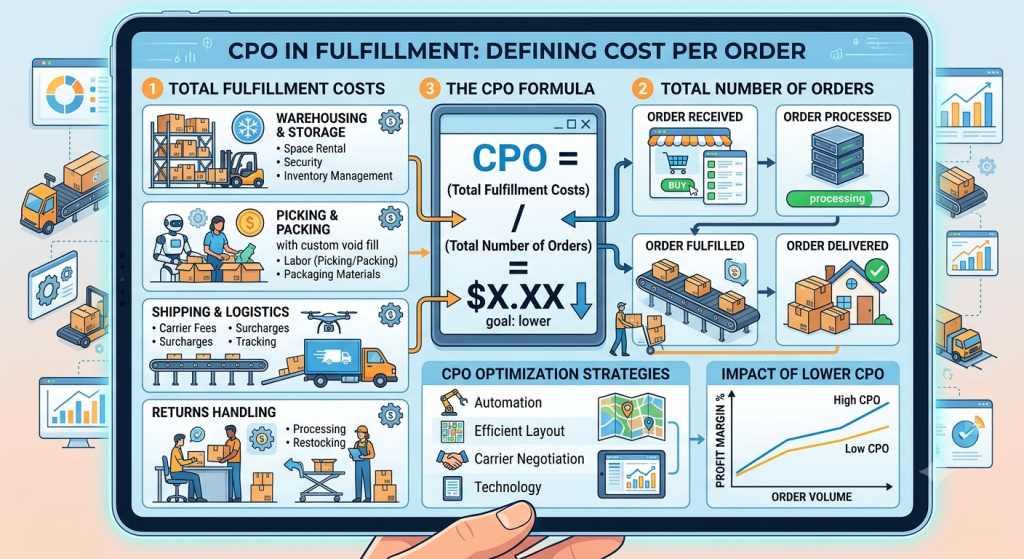
- Fulfillment cost per order (FBA fees vs. 3PL pick/pack + postage)
- Storage cost per month per unit (especially for slow movers)
- Return processing costs
- Overhead costs: your time managing each relationship
Run this analysis across your top 10–20 SKUs before committing. In many cases, FBA wins on convenience but a 3PL wins on total cost — especially for sellers above $1M in annual revenue who can negotiate favorable 3PL rates.
Amazon FBA and third-party logistics providers are not competitors — they are tools. The right tool depends on your product profile, channel strategy, growth stage, and risk tolerance.
FBA offers unmatched speed-to-market, Prime eligibility, and hands-off operations for Amazon-centric sellers. But it comes with real costs: margin erosion, inventory inflexibility, platform dependency, and limited brand expression.
A 3PL offers control, flexibility, and platform independence — essential for sellers building a brand beyond Amazon, managing complex inventory, or who have experienced the fragility of relying on a single fulfillment channel.
For many sellers at scale, the answer is not FBA or 3PL, but FBA and 3PL — a hybrid architecture that combines the conversion power of Prime with the resilience and flexibility of an independent logistics partner.
|