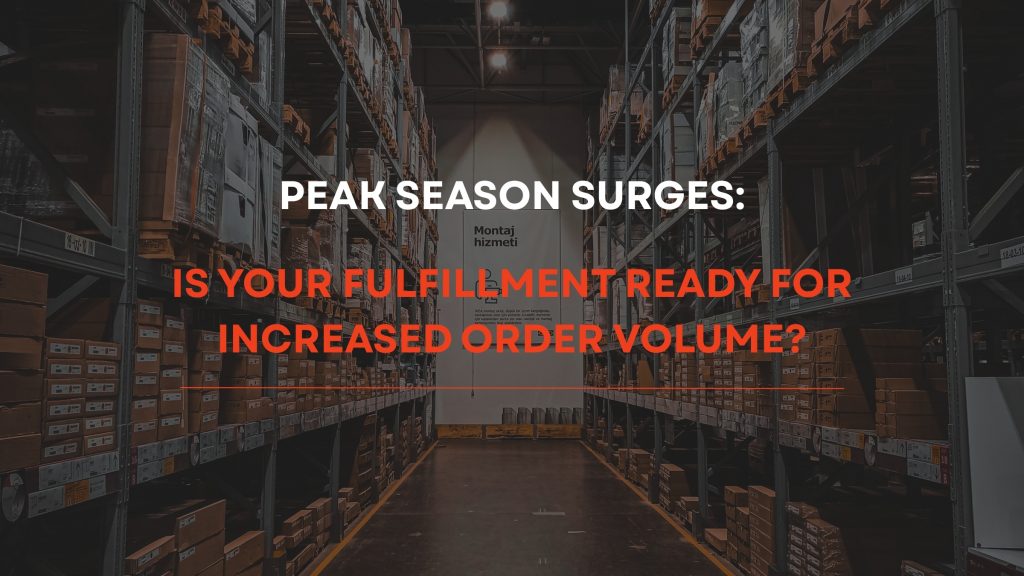
Peak Season Surges: Is Your Fulfillment Ready for Increased Order Volume?
At HoMart Logistics and Fulfillment, the goal isn’t just to help you ship orders. It’s to make sure your operation is ready for any surge, planned or unexpected.
Running an e-commerce business is exciting but fulfillment can quickly become one of the most
time-consuming and costly parts of your operation. What starts as a manageable in-house
process often grows into rising labor costs, inventory challenges, shipping delays, and
operational bottlenecks.
Inventory management plays a critical role in a business’s profitability, cash flow, and financial reporting. One of the most important decisions businesses must make is choosing how inventory costs are recorded and managed. Two of the most commonly used inventory valuation methods are FIFO (First In, First Out) and LIFO (Last In, First Out).
In today’s digital-first economy, consumers expect to buy anything, anytime, and anywhere—with seamless transitions between online and offline channels. This expectation has given rise to the omnichannel supply chain, a modern logistics model that integrates multiple sales and fulfillment channels into a unified, customer-centric ecosystem.
This year’s One Of A Kind (OOAK) Christmas Show felt extra special. Celebrating its 50th anniversary, the event carried a bit of history in every aisle — half a century of supporting Canadian makers, artisans, and small businesses. Walking in, you could feel the mix of tradition and excitement. The halls were festive, buzzing with families, creators, and curious shoppers, all celebrating the magic of handmade craft in the heart of Toronto.
In today’s digital-first economy, consumers expect to buy anything, anytime, and anywhere—with seamless transitions between online and offline channels. This expectation has given rise to the omnichannel supply chain, a modern logistics model that integrates multiple sales and fulfillment channels into a unified, customer-centric ecosystem.